

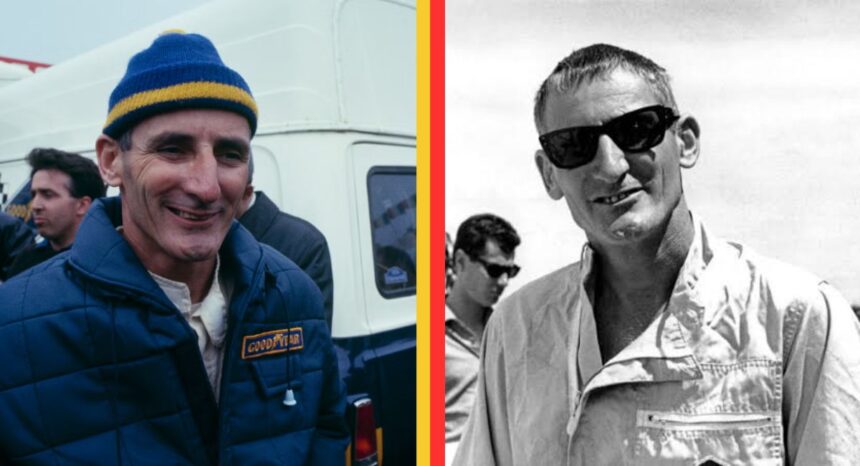
Ken Miles was not just a racing driver. He was a brilliant engineer, a fearless competitor, and one of the most important figures behind Ford’s historic victory over Ferrari at Le Mans. Known for his sharp technical mind and no-nonsense personality, Miles helped develop some of the most iconic race cars of the 1960s, including the Ford GT40. His story became widely known through the film Ford v Ferrari, but the real Ken Miles was even more fascinating than the Hollywood version. From his early days in England to his controversial 1966 Le Mans finish and tragic death, his life remains one of motorsport’s most powerful stories. This article explores the real Ken Miles, his career, family, achievements, and lasting legacy.
Quick Facts About Ken Miles
| Full Name | Kenneth Henry Jarvis Miles |
|---|---|
| Known As | Ken Miles |
| Date of Birth | November 1, 1918 |
| Place of Birth | Sutton Coldfield, England |
| Date of Death | August 17, 1966 |
| Age at Death | 47 years old |
| Nationality | British |
| Profession | Racing Driver, Engineer, Test Driver |
| Famous For | Ford GT40 development and 1966 Le Mans |
| Wife | Mollie Miles |
| Son | Peter Miles |
| Major Teams | Shelby-American, Ford |
| Hall of Fame | Motorsports Hall of Fame of America |
Early Life and Background
Ken Miles was born in Sutton Coldfield, England, an area now part of Birmingham. Growing up near one of Britain’s major industrial centers helped shape his early interest in machines, engines, and automobiles.
He left school at a young age and began an apprenticeship at Wolseley Motors. This gave him practical experience with vehicle construction and repair. Unlike many drivers who focused only on racing, Miles learned how cars worked from the inside out.
Before becoming famous in motorsport, he also raced motorcycles. His early love of speed was matched by a deep curiosity about engineering. That combination would later make him one of the most valuable development drivers in racing history.
During World War II, Miles served in the British Army. His military experience involved mechanical and armored vehicle work, and he eventually reached the rank of staff sergeant. Working with military machinery gave him an even stronger understanding of performance, durability, and mechanical problem-solving.
Ken Miles’ Move to America
After the war, Ken Miles returned to racing in Britain. He competed in cars such as Bugattis, Alfa Romeos, and Alvises before moving into other performance machines.
In 1952, he moved to the United States and settled in Los Angeles, California. This move changed the direction of his life. Southern California had a growing sports car culture, and Miles quickly found a place in that world.
He worked as a service manager for an MG distributor, but racing remained his true passion. Soon, he was competing in Sports Car Club of America events and making a name for himself as both a driver and builder.
Miles did not need the biggest budget to win. He often designed, modified, and improved cars himself. His success came from intelligence, mechanical skill, and precise driving.
Career and Major Achievements
Early Racing Success
In the early 1950s, Ken Miles began dominating local sports car races in the United States. In 1953, he achieved a remarkable series of wins in an MG-based special that he designed and built.
One of his most famous early cars was known as the “Flying Shingle.” It was not a glamorous machine, but it was fast, light, and effective. Miles used it to prove that smart engineering could beat more expensive competition.
His success on the West Coast racing scene helped him earn a reputation as a serious competitor. He was not only fast, but also highly technical. He understood what a car needed to do, and he knew how to improve it.
Working With Carroll Shelby
Ken Miles’ career reached a new level when he became involved with Carroll Shelby and Shelby-American. Shelby needed drivers who could do more than simply turn fast laps. He needed people who could test cars, identify problems, and help engineers make them better.
Miles was perfect for that role.
He played a key part in the development of the Shelby Cobra, including the 289 Cobra, Daytona Coupe, and 427 Cobra. His feedback helped transform these cars into world-class competitors.
The partnership between Ken Miles and Carroll Shelby was built on trust, honesty, and performance. Both men had strong personalities, but they shared the same goal: build winning race cars.
The Ford GT40 Program
The Ford GT40 became one of the most famous race cars ever made, and Ken Miles was central to its development.
Ford wanted to defeat Ferrari at the 24 Hours of Le Mans, one of the most difficult races in the world. Early versions of the GT40 were fast but unreliable. The car needed serious development before it could challenge Ferrari.
Miles helped test and refine the GT40 through Shelby-American. He understood that endurance racing required more than raw speed. The car had to survive 24 hours of extreme stress, heat, braking, cornering, and driver changes.
His feedback helped Ford improve the GT40’s handling, reliability, and performance. The result was a machine that would eventually dominate Le Mans, winning the race in 1966, 1967, 1968, and 1969.
Ken Miles and the 1966 Le Mans Controversy
The 1966 24 Hours of Le Mans is the event most closely linked to Ken Miles.
Miles shared the No. 1 Ford GT Mk II with Denny Hulme. During the race, they performed brilliantly and were in position to win. Ford was finally about to defeat Ferrari at Le Mans, and the company wanted a dramatic public relations moment.
Ford executives requested that their leading cars slow down and cross the finish line together for a staged photo finish. Miles followed the instruction.
However, the decision changed the result. Bruce McLaren and Chris Amon’s Ford had started farther back on the grid. Because of that, officials ruled that their car had technically covered a greater distance during the race.
McLaren and Amon were declared the winners. Miles and Hulme finished second.
For many racing fans, this remains one of the most heartbreaking moments in motorsport history. Ken Miles had helped develop the car, driven an incredible race, and appeared to deserve the victory. Yet the official record denied him the Le Mans win.
Ken Miles’ Death
Ken Miles died on August 17, 1966, just two months after the Le Mans controversy.
He was testing the Ford J-car at Riverside International Raceway in California. The J-car was an experimental prototype designed as a possible successor to the Ford GT40 Mk II.
During high-speed testing, the car became unstable, crashed, broke apart, and caught fire. Miles was thrown from the vehicle and killed instantly.
His death shocked the racing world. He was only 47 years old and still at the height of his abilities as a driver and engineer.
After the crash, Ford made major safety and aerodynamic changes to the car. The revised version later became the Ford Mk IV, which won the 1967 24 Hours of Le Mans.
Personal Life
Away from racing, Ken Miles was a husband and father. He was married to Mollie Miles, who supported him through the demanding and dangerous world of motorsport.
Miles was known for his sharp humor, direct speech, and strong personality. He had a pronounced Birmingham accent and was sometimes given affectionate nicknames by his American racing colleagues.
Although he could be difficult and blunt, those who knew racing respected his knowledge. He was honest about a car’s weaknesses and did not soften his opinion to please others.
That honesty made him valuable. In racing, a driver who can clearly explain what a car is doing can help a team find speed, improve safety, and win races.
Family and Relationships
Ken Miles and his wife Mollie had one son, Peter Miles. Peter was nearly 16 years old when he witnessed the tragic crash that killed his father.
After Ken’s death, Peter went on to work in the automotive and racing world. He spent time in custom car shops and later became involved in off-road racing as a fabricator, mechanic, and crew chief.
The Miles family story became more widely known after Ford v Ferrari, where Ken Miles was portrayed by Christian Bale. Mollie Miles was portrayed by Caitriona Balfe, and Peter Miles was portrayed by Noah Jupe.
The film helped modern audiences understand that behind the racing legend was a real family affected by the risks of motorsport.
Net Worth and Financial Success
There is no widely verified public record of Ken Miles’ exact net worth. He raced during a very different era, long before top drivers earned the huge salaries and sponsorship deals seen in modern motorsport.
Miles was successful and respected, but he was not known as a celebrity millionaire. Much of his value came from his rare combination of driving talent and engineering knowledge.
His financial success should be understood in the context of 1950s and 1960s racing. Drivers often worked as mechanics, testers, and development specialists. Miles earned his reputation through skill, not flashy wealth.
Today, his legacy is worth far more than any estimated number. His influence on Ford, Shelby-American, and endurance racing remains priceless to motorsport history.
Interesting Facts About Ken Miles
He Was Both a Driver and an Engineer
Ken Miles was not just someone who drove fast. He understood how cars worked mechanically and could help improve them through testing and feedback.
He Helped Build Ford’s Le Mans Success
Although he never officially won Le Mans, Miles played a major role in developing the Ford GT40 program that defeated Ferrari.
He Nearly Won the 1966 Le Mans
Miles was in position to win the 1966 race, but Ford’s planned photo finish changed the official result.
He Won Daytona and Sebring in 1966
Before Le Mans, Ken Miles won the 24 Hours of Daytona and the 12 Hours of Sebring in the same year.
He Was Portrayed by Christian Bale
The 2019 film Ford v Ferrari introduced Ken Miles to millions of new fans around the world.
He Had a Reputation for Brutal Honesty
Miles was known for being direct and sometimes sarcastic. But his honesty helped teams build better race cars.
Ken Miles in Popular Culture
Ken Miles became a mainstream name after the release of Ford v Ferrari in 2019. The film dramatized Ford’s battle with Ferrari and focused heavily on the relationship between Miles and Carroll Shelby.
Christian Bale’s performance showed Miles as intense, funny, talented, and deeply human. While some details were adjusted for drama, the film captured the spirit of his story.
For many viewers, the movie was their first introduction to Ken Miles. For longtime racing fans, it was a welcome recognition of someone who had been underappreciated for decades.
The renewed interest also helped younger generations discover the history of the Ford GT40, Shelby-American, and 1960s endurance racing.
Legacy of Ken Miles
Ken Miles’ legacy is built on talent, courage, and engineering brilliance.
He helped prove that a racing driver could be more than a person behind the wheel. He showed how valuable it was to understand the car, communicate with engineers, and push development forward.
His work with Shelby-American and Ford helped create some of the most iconic race cars in history. The Ford GT40’s success at Le Mans is part of his story, even if the official 1966 trophy did not go to him.
Miles was posthumously inducted into the Motorsports Hall of Fame of America in 2001. He was also honored by the West Coast Stock Car Hall of Fame.
Today, Ken Miles is remembered as one of motorsport’s great unsung heroes. His story continues to inspire racing fans, engineers, and anyone who values dedication to craft.
Conclusion
Ken Miles remains one of the most important figures in motorsport history. He was a gifted driver, a skilled engineer, and a key part of Ford’s successful effort to defeat Ferrari at Le Mans.
His life was filled with speed, innovation, sacrifice, and unforgettable moments. Although he was denied an official Le Mans victory in 1966, many fans still see him as the true hero of that race.
More than five decades after his death, Ken Miles continues to inspire people who love racing, engineering, and stories of determination. His legacy proves that greatness is not always measured by trophies alone, but by the lasting impact a person leaves behind.
Frequently Asked Questions About Ken Miles
Who was Ken Miles?
Ken Miles was a British racing driver, engineer, and test driver best known for his work with Carroll Shelby, Shelby-American, and the Ford GT40 program.
Did Ken Miles win Le Mans?
Ken Miles did not officially win the 1966 24 Hours of Le Mans. He finished second after Ford arranged a photo finish, and officials ruled that Bruce McLaren and Chris Amon had covered a greater distance.
How did Ken Miles die?
Ken Miles died while testing the Ford J-car at Riverside International Raceway in California on August 17, 1966. The car crashed at high speed and broke apart.
Was Ken Miles a real person in Ford v Ferrari?
Yes. Ken Miles was a real racing driver and engineer. In the film Ford v Ferrari, he was portrayed by Christian Bale.
What was Ken Miles famous for?
Ken Miles was famous for his racing skill, engineering talent, work with Shelby-American, role in the Ford GT40 program, and controversial 1966 Le Mans finish.
Who was Ken Miles’ wife?
Ken Miles was married to Mollie Miles. They had one son named Peter Miles.
What cars did Ken Miles help develop?
Ken Miles helped develop several important race cars, including Shelby Cobras, the Daytona Coupe, and Ford GT40 models.